
Charakteristika
Modernisation of a key section of the European rail corridor
The optimisation of the Karlštejn–Beroun section represented an exceptionally technically challenging modernisation of part of the Prague-Smíchov–Beroun–Plzeň–Nürnberg (Germany) backbone railway line, which forms part of the TEN-T network. This section had long been one of the most problematic on the Czech rail network, both in terms of capacity and operational reliability. Frequent faults in the overhead contact line, rockfalls and fallen trees had repeatedly disrupted the smooth flow of rail traffic here in the past.
Complete infrastructure renewal and the new junction to Lom, bridges replacement
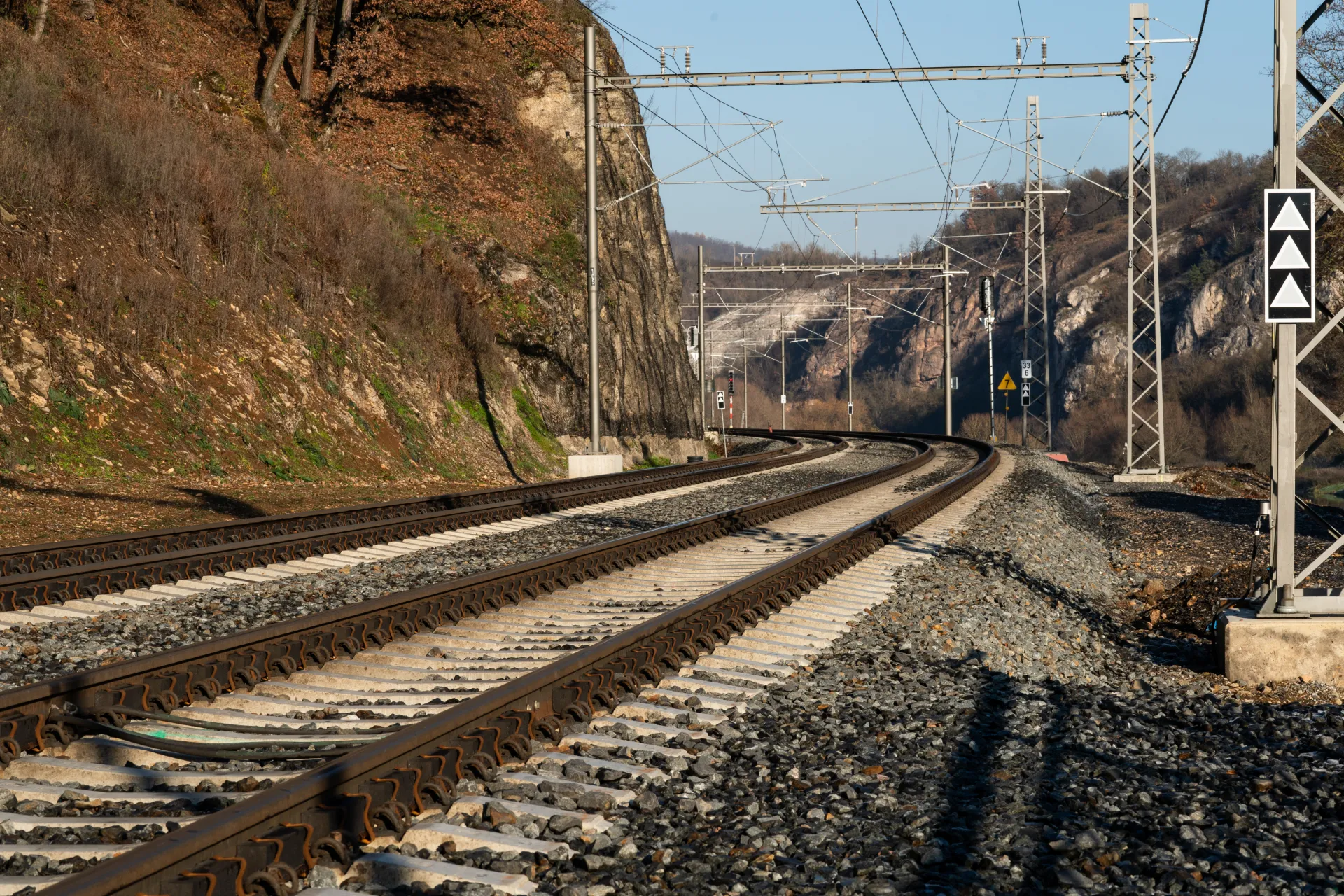
From a technical perspective, this is a seven-kilometre-long section between stations, the modernisation of which focused on the comprehensive renewal of the railway infrastructure with the aim of improving line performance, safety and the smooth flow of traffic. A completely new junction, Lom, was constructed in the middle of the section, built on retaining walls hundreds of metres long. The main reason for its construction is to increase the line’s capacity during emergencies and during future maintenance works. The project also involved the replacement of 28 bridge structures, most of which were stone culverts dating from the second half of the 19th century.
Srbsko Station: a fusion of history and contemporary architecture
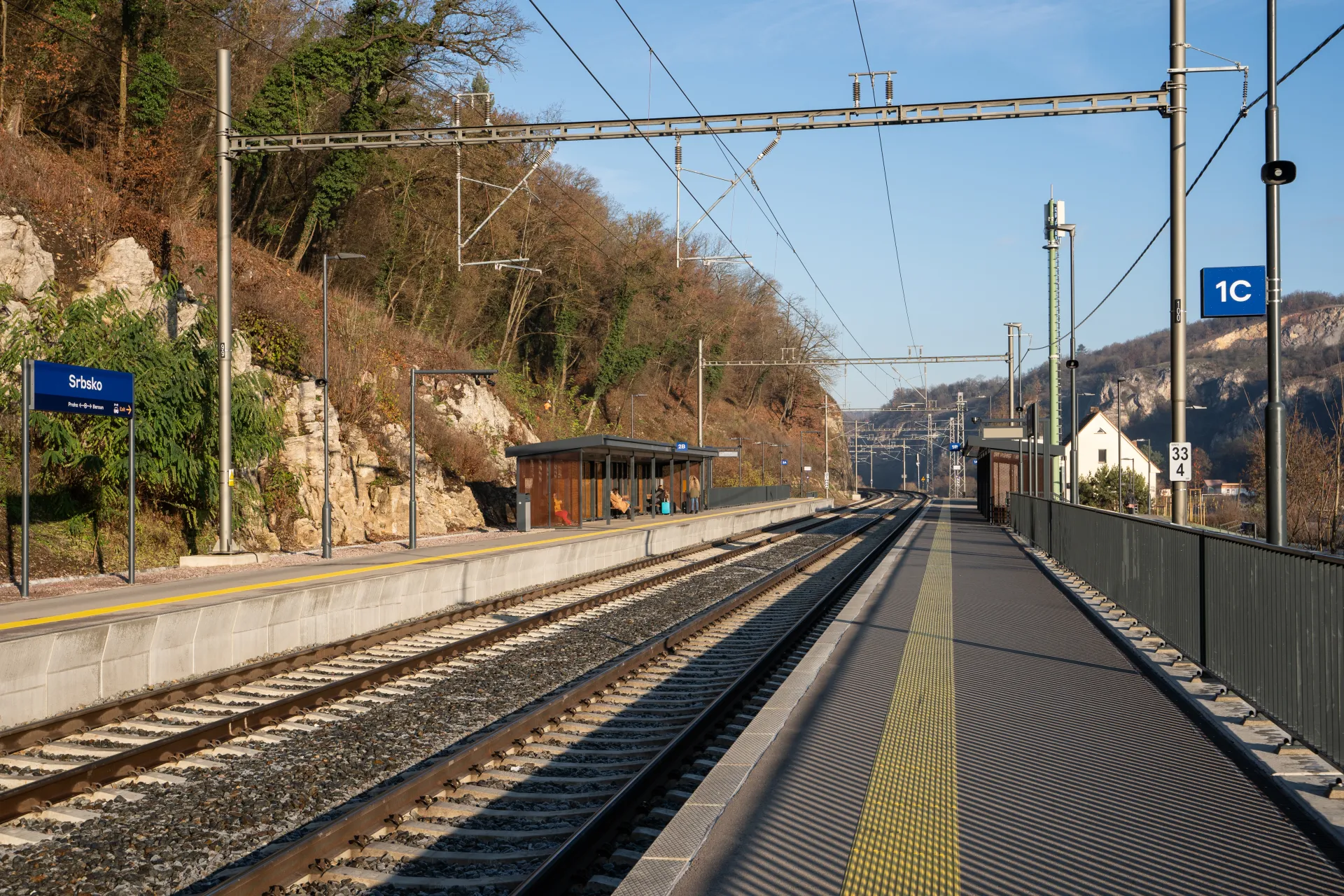
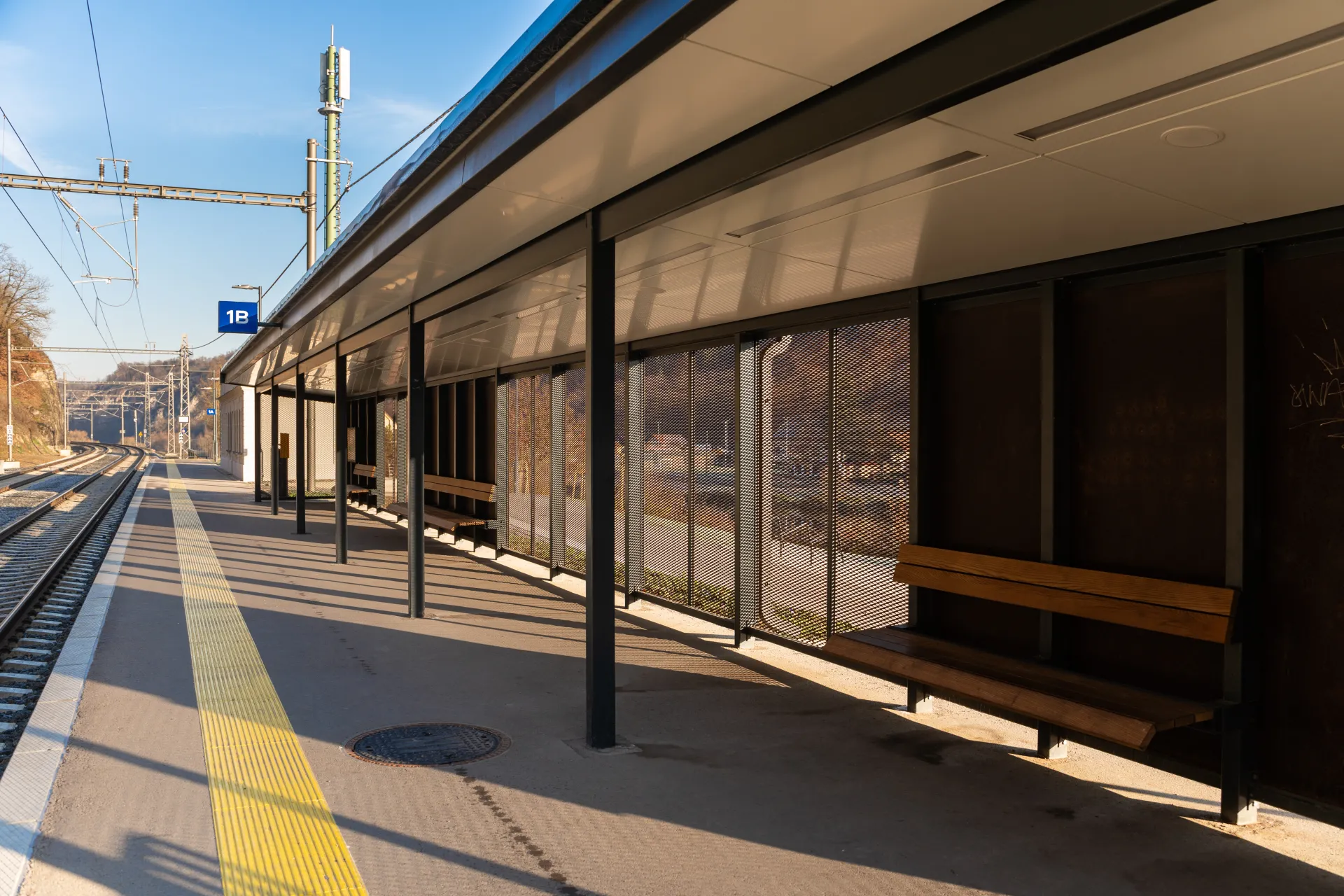
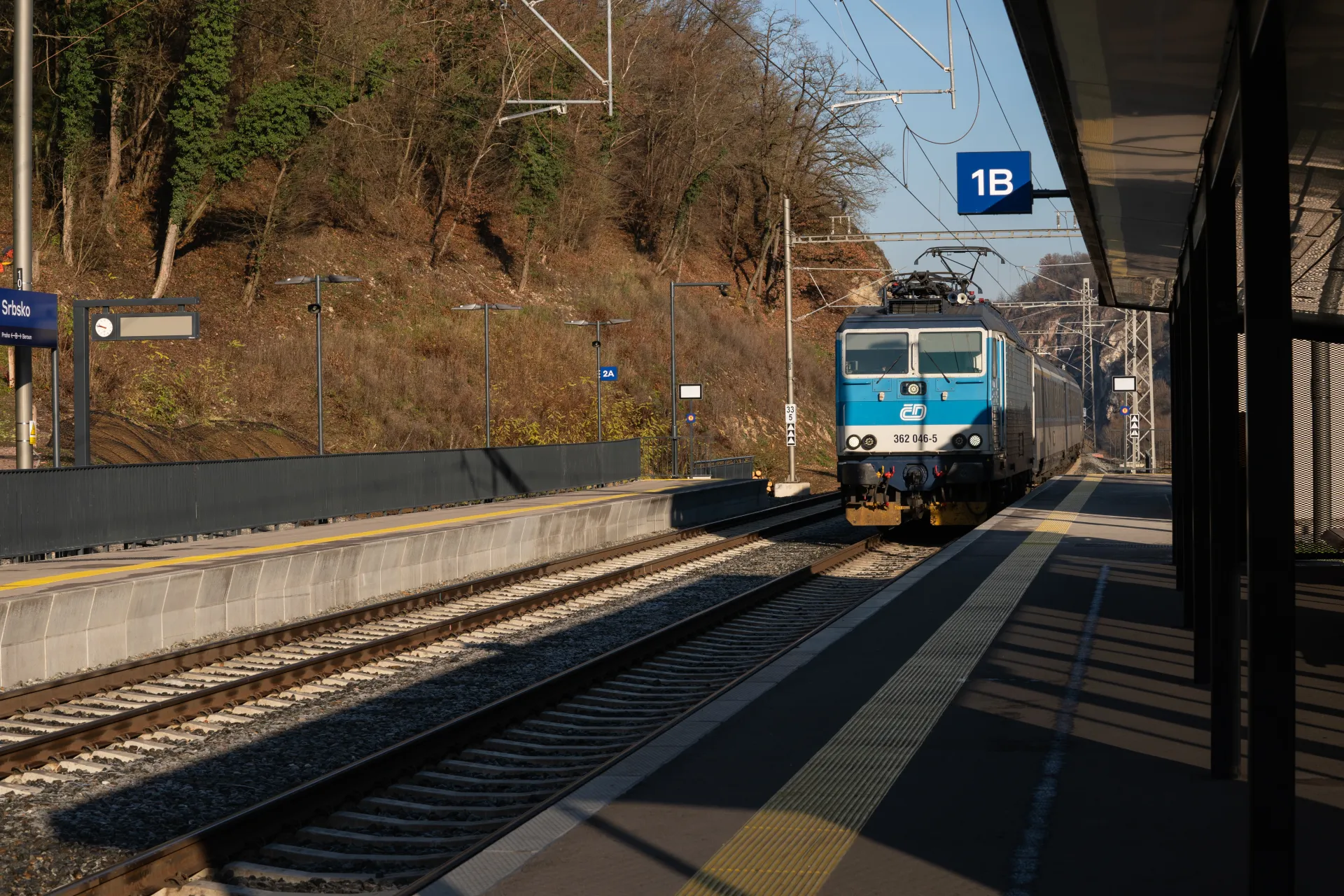
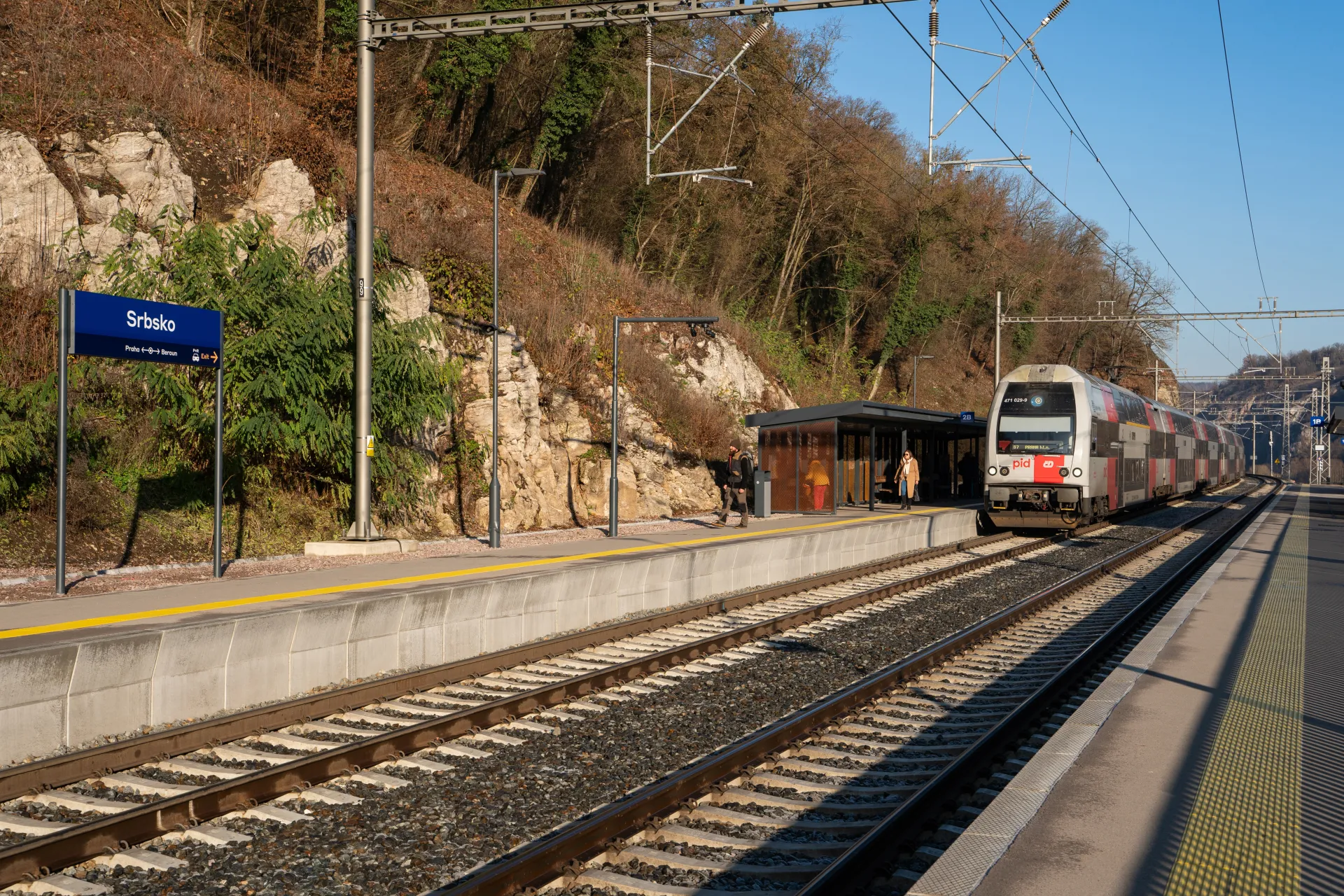
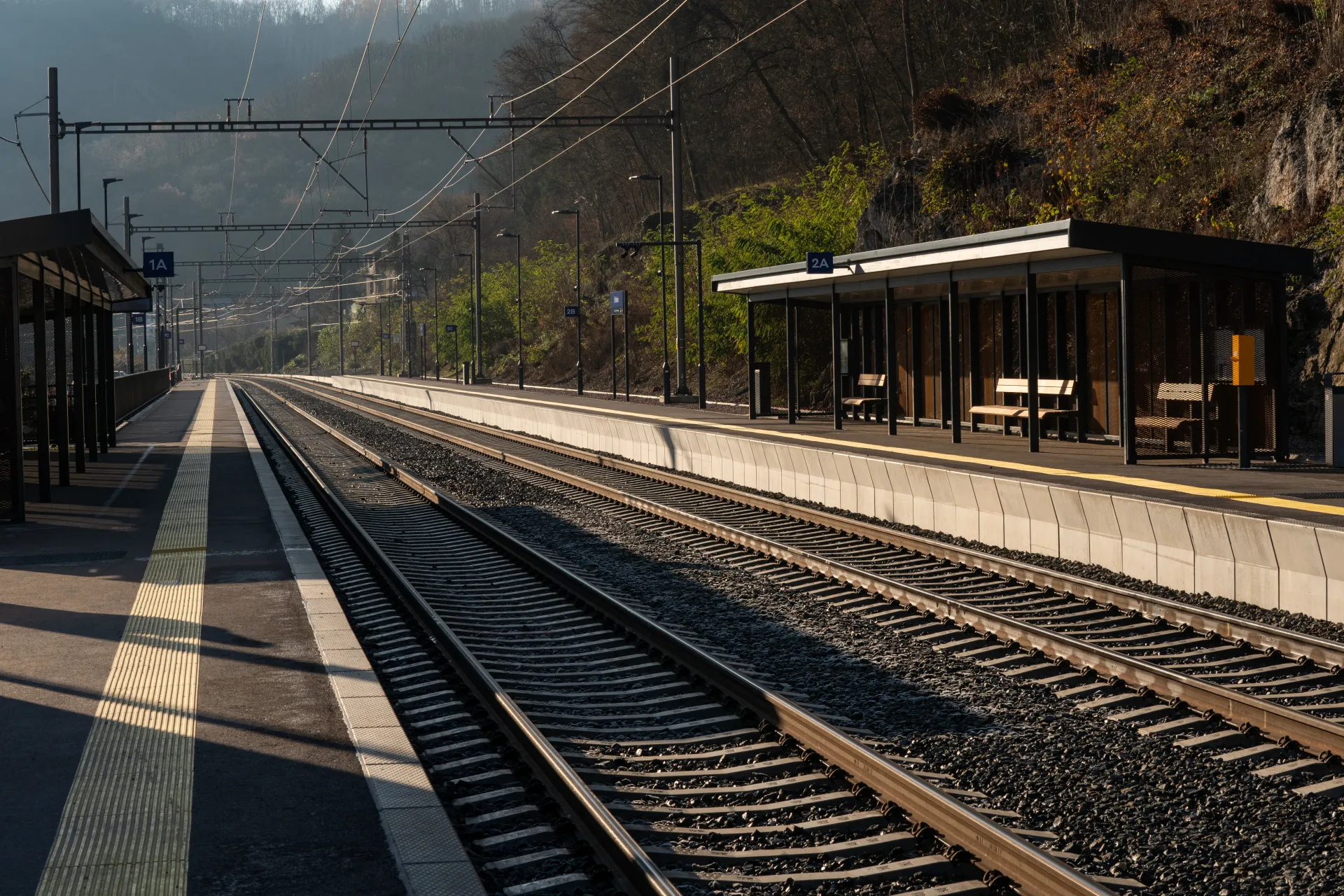
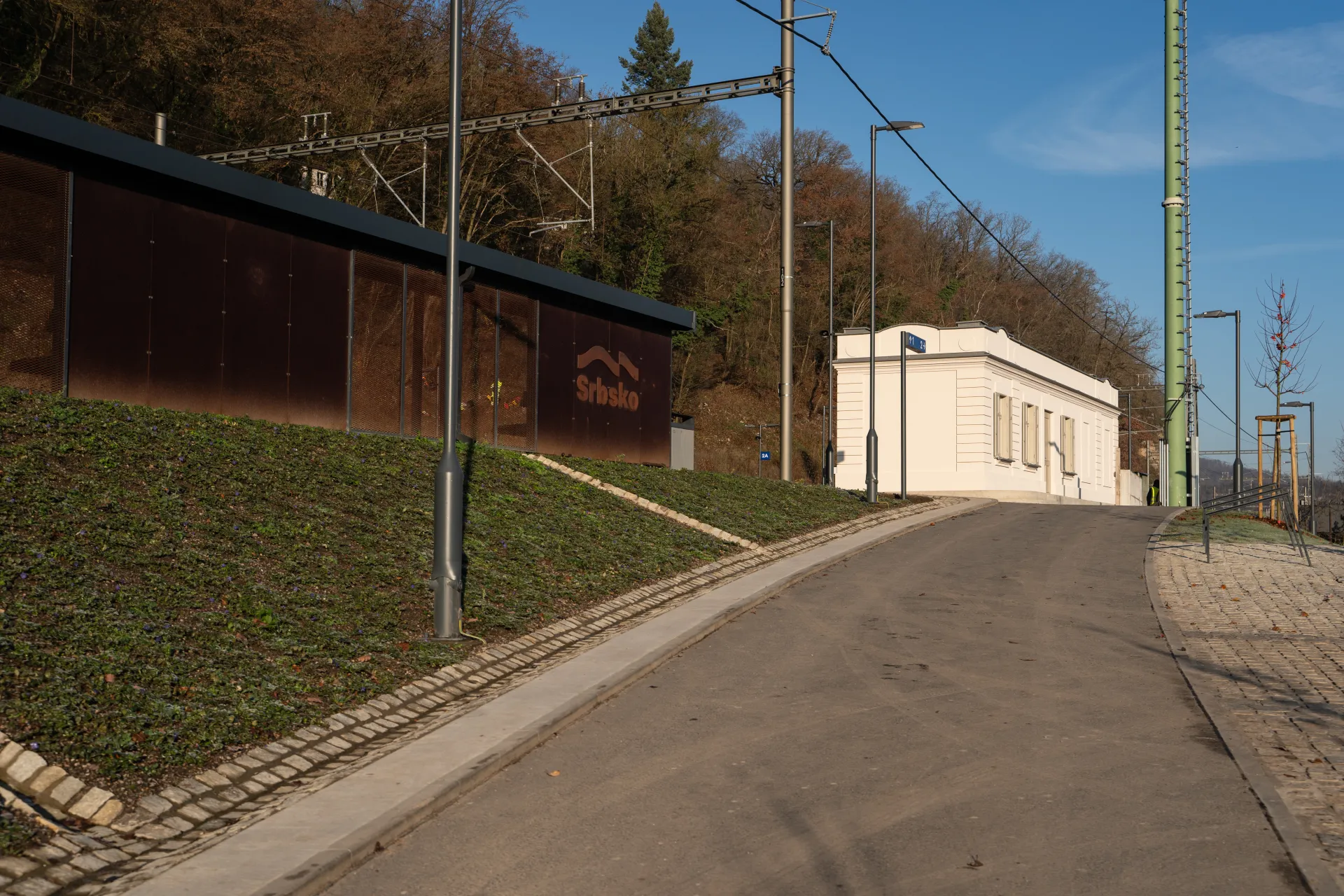
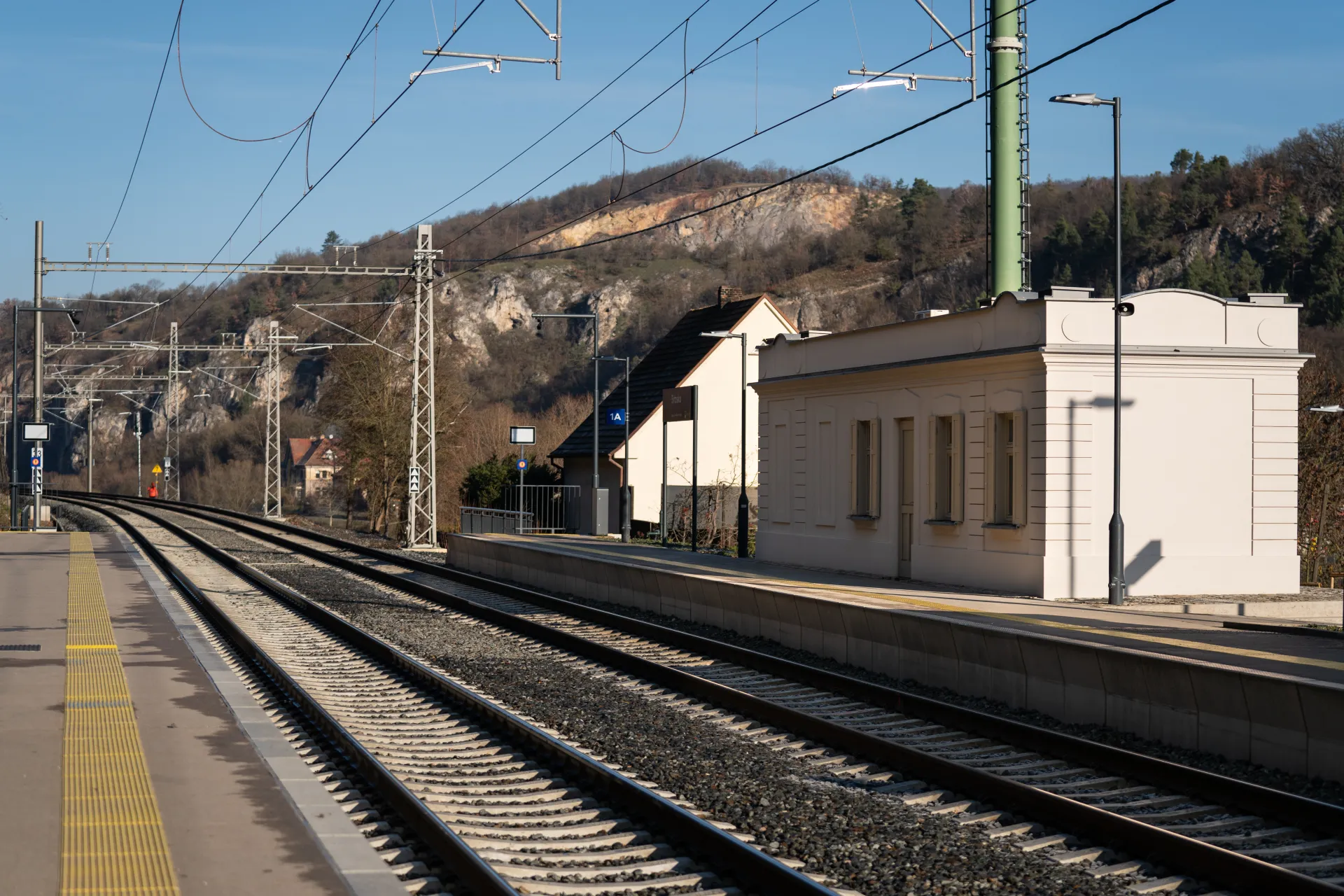
The most striking architectural feature of the modernisation is Srbsko Station, where collaboration between architects and designers has resulted in unconventional platform shelters made of Corten steel – untreated steel whose surface naturally develops a characteristic layer of rust. This material pays homage to the village’s industrial history and creates an interesting contrast with the replica Art Nouveau shelter, which is a faithful reproduction of the original waiting room dating from the turn of the 19th and 20th centuries.
In addition to serving as a technical facility for the railway, the new historicist building will also function as the village’s tourist information centre. A new platform surface made of coloured asphalt was also used here for the first time. The entire station thus gives an architecturally clean, refined and contemporary impression.
Preparing for the future of rail transport
The line underwent a complete reconstruction of the overhead contact line and was prepared for the transition to a 25 kV AC traction system. An integral part of the project was also the modernisation of signalling and safety systems, including the installation of a new electronic automatic block system with axle counters and preparations for operation under the supervision of the ETCS system.
Challenging restoration of rock faces in a protected area
Among the most challenging and, at the same time, least common aspects of the project were the design and implementation of restoration measures on a total of seventeen rock faces. Some of these rise directly alongside the track to a height of several tens of metres. The scope and nature of the stabilisation work varied considerably, partly due to the presence of several species of strictly protected plants.
Furthermore, the preparation of the construction work was significantly influenced by the strict conditions imposed by the Nature Conservation Agency of the Czech Republic as a considerable part of the modernised section is located within the Český kras Protected Landscape Area. The design of the technical solutions therefore had to strike a careful balance between the requirements of the railway infrastructure and the protection of the valuable natural environment.
Construction under exceptionally constrained conditions
The project itself was also exceptional due to the complicated access conditions. Along the entire length of the section, one track was flanked by a rock massif, whilst access to the other track was significantly restricted by the bed of the River Berounka. All construction work therefore required thorough coordination and meticulous logistical preparation.
Faster and more reliable connections for regional and international transport
The modernisation of the Karlštejn–Beroun line section has resulted in more comfortable and faster travel for both passengers on Prague’s commuter services and those using long-distance international services between Prague and Nuremberg. Once the ETCS system has been activated, the modernised section will allow line speeds of up to 145 km/h for tilting trains and 130 km/h for conventional trains. This will not only reduce journey times but also further increase the capacity and reliability of rail transport on one of the most important rail links in the Czech Republic.